



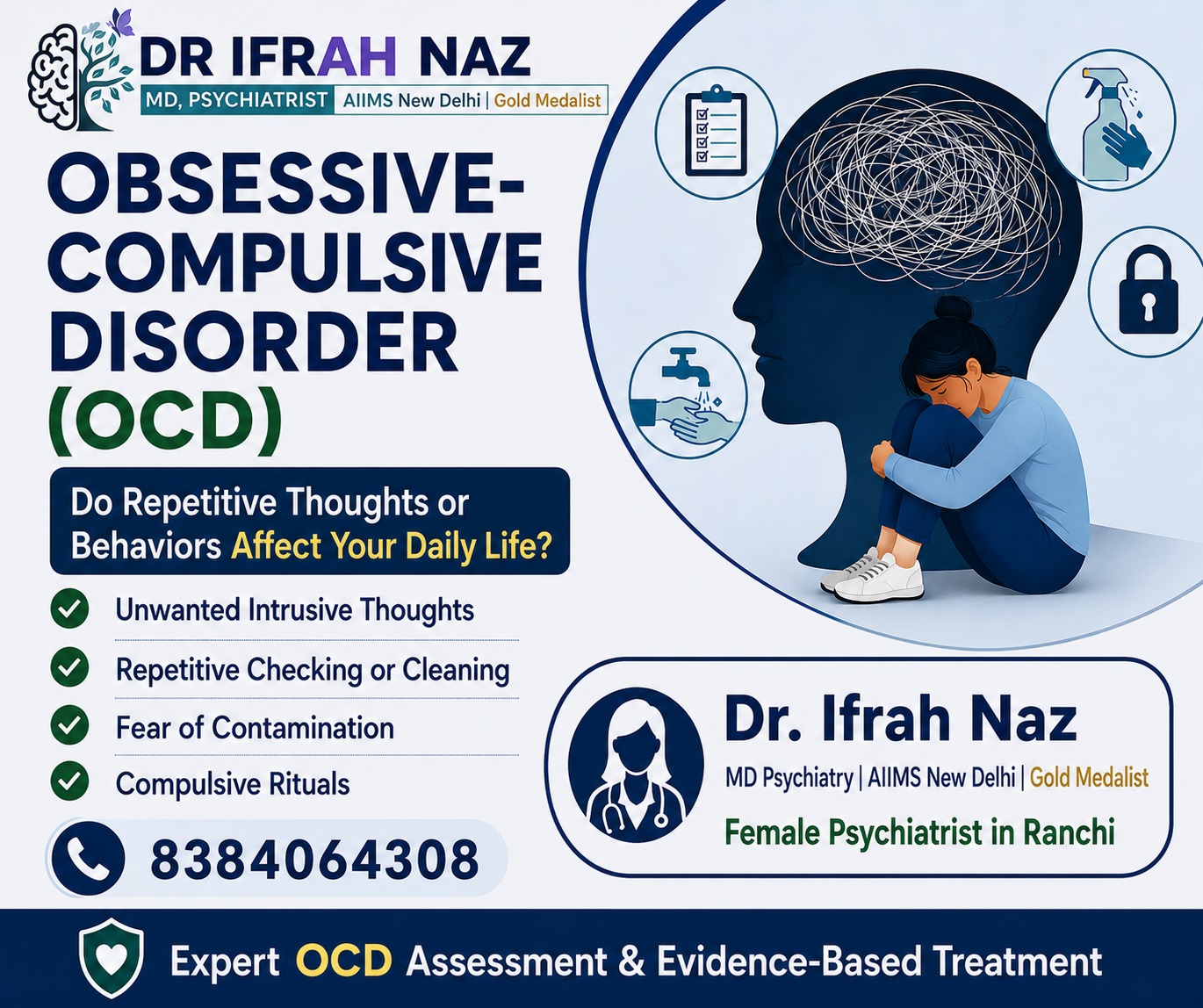
Best Psychiatrist in Ranchi: Understanding Obsessive-Compulsive Disorder (OCD)
Obsessive-Compulsive Disorder (OCD) is a common yet often misunderstood mental health condition. Many people think OCD simply means being overly neat or organized, but in reality, it involves persistent unwanted thoughts (obsessions) and repetitive behaviors (compulsions) that can interfere with everyday life.
If you or someone you love experiences repetitive thoughts or rituals that feel impossible to control, seeking help from the Best Psychiatrist in Ranchi can lead to early diagnosis and effective treatment. With the right care, most people with OCD can manage their symptoms and enjoy a healthier, more fulfilling life.
Best Psychiatrist in Ranchi Explains: What is Obsessive-Compulsive Disorder (OCD)?
Obsessive-Compulsive Disorder (OCD) is a mental health condition characterized by two main features:
Obsessions
Obsessions are recurring, intrusive thoughts, images, or urges that cause anxiety or distress.
Compulsions
Compulsions are repetitive behaviors or mental rituals performed to reduce the anxiety caused by obsessions.
Although these rituals may provide temporary relief, they do not solve the underlying problem and often become repetitive and time-consuming.
Consulting the Best Psychiatrist in Ranchi can help you understand your symptoms and begin appropriate treatment.
Real-Life Examples of OCD
Many people do not realize they may have OCD because the symptoms can appear as everyday habits. Here are some common examples:
Example 1: Repeated Checking
Riya locks her front door before leaving home. Even though she knows it is locked, she returns five or six times to check it again because she fears something terrible might happen if she doesn't.
Example 2: Excessive Hand Washing
Aman washes his hands repeatedly because he constantly feels they are contaminated, even after they are already clean.
Example 3: Perfectionism Beyond Normal
A student repeatedly erases and rewrites the same sentence because it never feels "perfect." As a result, simple homework takes several hours to complete.
These are not simply habits or personality traits—they can be symptoms of OCD that require professional evaluation.
Common Signs and Symptoms of OCD
People with OCD may experience one or more of the following symptoms:
- Unwanted intrusive thoughts
- Fear of contamination
- Repetitive checking of locks, switches, or appliances
- Excessive cleaning or hand washing
- Counting rituals
- Arranging objects repeatedly
- Need for symmetry or perfection
- Constant doubt
- Repeated reassurance seeking
- Fear of causing harm to others
If these symptoms consume significant time or interfere with daily life, it is advisable to consult the Best Psychiatrist in Ranchi.
What Causes OCD?
Although the exact cause remains unknown, researchers believe several factors contribute to OCD.
Genetics
People with a family history of OCD may have an increased risk.
Brain Function
Differences in certain brain circuits involved in decision-making and anxiety regulation may contribute.
Stressful Life Events
Major life changes or emotional stress can sometimes trigger or worsen symptoms.
Psychological Factors
Certain personality traits and anxiety-related conditions may increase susceptibility.
A detailed assessment by the Best Psychiatrist in Ranchi helps identify individual contributing factors and guide treatment.
How OCD Affects Daily Life
Without proper treatment, OCD can interfere with nearly every aspect of life.
It may affect:
- Academic performance
- Workplace productivity
- Family relationships
- Marriage
- Friendships
- Emotional well-being
Many people spend hours every day performing compulsive rituals, leaving little time for work, studies, or leisure activities.
How is OCD Diagnosed?
Diagnosis involves a comprehensive psychiatric evaluation that includes:
- Detailed medical history
- Psychological assessment
- Review of obsessive thoughts
- Evaluation of compulsive behaviors
- Assessment of symptom severity
- Impact on daily functioning
Early diagnosis allows the Best Psychiatrist in Ranchi to recommend the most appropriate treatment plan.
Treatment Options for OCD
The encouraging news is that OCD is highly treatable.
Cognitive Behavioral Therapy (CBT)
CBT, especially Exposure and Response Prevention (ERP), is considered one of the most effective psychological treatments for OCD.
Medication
Certain medications may help reduce obsessive thoughts and compulsive behaviors when prescribed by a qualified psychiatrist.
Counseling and Psychoeducation
Counseling helps individuals understand OCD, reduce anxiety, and develop healthier coping strategies.
Lifestyle Changes
Treatment may also include:
- Stress management
- Regular physical activity
- Adequate sleep
- Mindfulness practices
- Healthy daily routines
A personalized treatment approach from the Best Psychiatrist in Ranchi can significantly improve symptoms and quality of life.
When Should You Seek Professional Help?
Consult a psychiatrist if:
- Intrusive thoughts are becoming frequent.
- Repetitive rituals consume a significant part of your day.
- Anxiety affects your work or studies.
- Relationships are suffering because of compulsive behaviors.
- You feel unable to control obsessive thoughts.
Early intervention often leads to better treatment outcomes.
Why Choose the Best Psychiatrist in Ranchi?
Choosing the right psychiatrist ensures:
- Accurate diagnosis
- Evidence-based treatment
- Personalized care
- Compassionate support
- Regular follow-up
- Long-term symptom management
Professional psychiatric care helps individuals regain confidence and improve their overall quality of life.
Frequently Asked Questions (FAQs)
1. What is Obsessive-Compulsive Disorder (OCD)?
OCD is a mental health condition involving persistent intrusive thoughts (obsessions) and repetitive behaviors (compulsions) performed to reduce anxiety.
2. What are the early signs of OCD?
Common early signs include repetitive checking, excessive cleaning, intrusive thoughts, counting rituals, fear of contamination, and constant reassurance seeking.
3. Can OCD be treated successfully?
Yes. Most people improve significantly with evidence-based treatments such as Cognitive Behavioral Therapy (CBT), Exposure and Response Prevention (ERP), medication when required, and regular psychiatric follow-up.
4. Is OCD a lifelong condition?
OCD is often a long-term condition, but with appropriate treatment many individuals experience excellent symptom control and improved quality of life.
5. What causes OCD?
OCD is believed to result from a combination of genetic, biological, and environmental factors. Stress may also worsen symptoms.
6. Can children and teenagers develop OCD?
Yes. OCD can occur in children, adolescents, and adults. Early diagnosis and treatment are important for better outcomes.
7. How is OCD diagnosed?
A psychiatrist diagnoses OCD through a detailed clinical evaluation, including symptom assessment, medical history, and the impact of symptoms on daily life.
8. When should I consult a psychiatrist for OCD?
You should seek professional help if obsessive thoughts or compulsive behaviors interfere with your work, education, relationships, or everyday activities.
9. Can stress make OCD worse?
Yes. Stressful situations often increase the intensity and frequency of obsessive thoughts and compulsive behaviors.
10. Where can I find the Best Psychiatrist in Ranchi for OCD treatment?
If you are looking for the Best Psychiatrist in Ranchi, consult Dr. Ifrah Naz, MD Psychiatry | AIIMS New Delhi | Gold Medalist, for comprehensive evaluation and evidence-based treatment for OCD and other mental health conditions.