



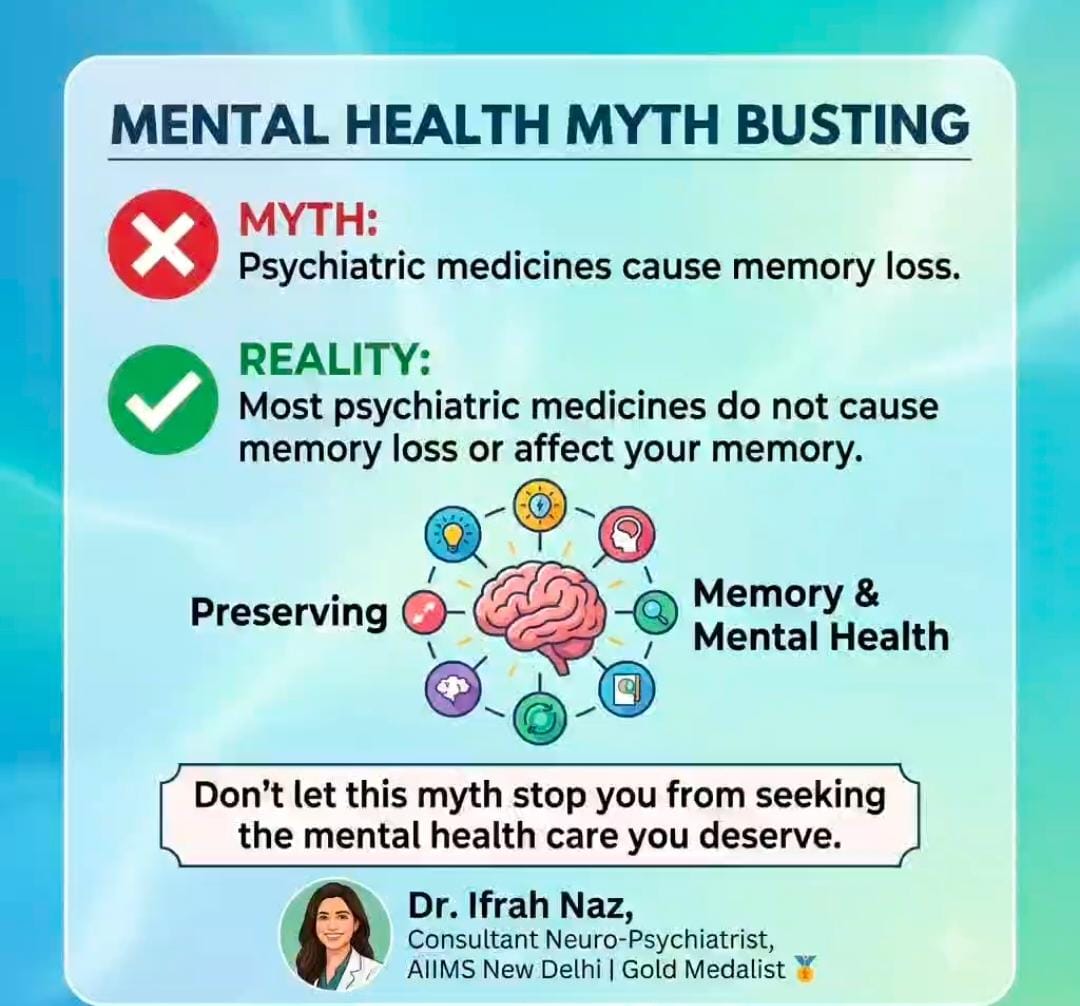
Do Psychiatric Medicines Cause Memory Loss? Understanding the Facts About Mental Health Treatment
Understanding the Myth About Psychiatric Medicines
Mental health awareness is essential for encouraging people to seek timely and appropriate treatment. However, several misconceptions about psychiatric medicines still prevent individuals from getting the support they need. One common belief is that psychiatric medicines cause memory loss or permanently affect brain functioning.
This misconception can create fear among people who are experiencing anxiety, depression, obsessive-compulsive disorder (OCD), sleep problems or other mental health conditions. Some individuals may avoid prescribed treatment because they are worried about becoming forgetful or experiencing long-term memory problems.
The reality is more nuanced. Most psychiatric medicines do not cause memory loss, although certain medications can affect alertness, concentration or memory in some individuals. These effects depend on the type of medicine, dosage, individual response and other health-related factors.
If you are concerned about psychiatric medication or memory changes, consulting a qualified Mental health doctor Ranchi can help you understand the possible causes and make informed decisions about treatment.
Myth: Psychiatric Medicines Cause Memory Loss
One of the most common myths surrounding mental health treatment is that taking psychiatric medicines will damage memory.
This belief often develops because people may experience forgetfulness, difficulty concentrating or mental tiredness while taking certain medications. However, these symptoms do not necessarily mean that the medicine is causing permanent memory damage.
Psychiatric medicines are prescribed to manage specific mental health conditions. Depending on the diagnosis, they may help reduce symptoms, improve emotional stability, support better sleep and improve everyday functioning.
It is important to understand that different psychiatric medicines work in different ways. Their effects on memory and concentration are not the same.
The key point: Psychiatric medicines should not be considered harmful to memory as a general rule. Their benefits, possible side effects and suitability should be evaluated individually by a psychiatrist.
Reality: Do Most Psychiatric Medicines Affect Memory?
Most commonly prescribed psychiatric medicines are not known to cause permanent memory loss in every person who takes them. Many people use psychiatric treatment safely under medical supervision and experience improvement in their mental health and daily functioning.
However, some medicines may cause temporary side effects such as:
- Drowsiness or sleepiness.
- Reduced alertness.
- Difficulty concentrating.
- Slower thinking.
- Temporary forgetfulness.
For example, certain anti-anxiety medicines, particularly benzodiazepines, may affect memory formation, alertness and coordination. Some medicines with anticholinergic effects may also contribute to confusion or memory difficulties, especially in susceptible individuals.
These effects depend on the specific medication, dosage, duration of use, age and individual health factors. This is why psychiatric medicines should always be prescribed and monitored by a qualified professional.
If you notice changes in your memory after starting a medicine, discuss them with your psychiatrist rather than stopping the treatment yourself.
Can Mental Health Conditions Themselves Affect Memory?
Yes. Memory and concentration difficulties are not always caused by medication. In many cases, an underlying mental health condition can affect how the brain processes, stores and recalls information.
Understanding this connection is important because treating the underlying condition may also help improve attention and cognitive functioning.
1. Depression and Memory Problems
Depression can affect more than mood. People experiencing depression may also notice difficulty concentrating, reduced motivation, forgetfulness and slower thinking.
Common experiences include:
- Forgetting everyday tasks.
- Difficulty remembering conversations.
- Trouble concentrating on work.
- Taking longer to make decisions.
- Difficulty recalling information.
These symptoms may improve as depression is effectively managed.
2. Anxiety and Difficulty Concentrating
When someone experiences persistent anxiety, their attention may remain focused on worries, fears or possible negative situations. This can make it difficult to concentrate on other activities.
People with anxiety may experience:
- Repeated worrying thoughts.
- Difficulty focusing on conversations.
- Forgetting small details.
- Mental restlessness.
- Difficulty completing tasks.
Anxiety-related concentration problems may sometimes be mistaken for memory loss.
3. Stress and Mental Exhaustion
Long-term stress can affect sleep, attention and mental performance. When a person constantly deals with pressure, their ability to focus and remember information may become affected.
Managing stress through appropriate treatment, healthy routines and coping strategies can support better mental well-being.
4. Sleep Problems and Memory
Sleep plays an important role in learning and memory. Insufficient or poor-quality sleep can make it harder to concentrate, process information and remember things.
People experiencing insomnia or irregular sleep patterns may notice forgetfulness, daytime tiredness and reduced productivity.
A proper assessment can help identify whether sleep difficulties, mental health concerns or medication effects are contributing to these symptoms.
Why Are Psychiatric Medicines Prescribed?
Psychiatric medicines are used to manage symptoms associated with different mental health conditions. They may help regulate mood, reduce anxiety, improve sleep or manage other psychiatric symptoms, depending on the diagnosis.
A psychiatrist may consider medication as part of treatment for conditions such as:
- Depression.
- Anxiety disorders.
- Obsessive-Compulsive Disorder (OCD).
- Bipolar disorder.
- Schizophrenia.
- Panic disorder.
- Certain sleep-related conditions.
- Other psychiatric conditions when clinically indicated.
Not everyone with a mental health condition requires medication. Treatment may also involve psychotherapy, counselling, lifestyle guidance or a combination of approaches.
A Mental health doctor Ranchi can evaluate the symptoms, medical history and individual needs before recommending an appropriate treatment plan.
How Can You Reduce the Risk of Medication-Related Side Effects?
Psychiatric medicines should be taken according to the psychiatrist's instructions. A few precautions can help patients manage treatment more safely.
- Follow the Prescribed Dosage
Take medication exactly as advised. Do not increase, decrease or change the dosage without medical guidance.
- Report New Symptoms
Inform your psychiatrist if you experience unusual drowsiness, confusion, forgetfulness or difficulty concentrating after starting a medicine.
- Attend Regular Follow-Up Appointments
Follow-up consultations help the psychiatrist review your response to treatment, monitor side effects and make adjustments when necessary.
- Avoid Stopping Medicines Suddenly
Some psychiatric medicines can cause withdrawal symptoms or a return of the original condition if stopped abruptly. Any change should be discussed with the prescribing doctor.
- Maintain Healthy Sleep Habits
Regular sleep routines, adequate rest and reduced screen exposure before bedtime may support concentration and memory.
- Avoid Self-Medication
Do not take someone else's psychiatric medicines or use medicines without professional advice. The right treatment depends on the individual's diagnosis and health history.
When Should You Consult a Psychiatrist About Memory Problems?
Occasional forgetfulness can happen to anyone. However, persistent or worsening memory difficulties should not be ignored, particularly when they interfere with work, studies, relationships or everyday activities.
Consider professional evaluation if you notice:
- Frequent forgetfulness.
- Difficulty concentrating on routine activities.
- Confusion or unusual changes in alertness.
- Memory changes after starting a new medicine.
- Persistent sleep difficulties.
- Problems remembering recent conversations or events.
- Difficulty managing everyday responsibilities.
Memory problems can have several possible causes, including stress, depression, anxiety, sleep disorders, medication effects and other medical or neurological conditions. A proper evaluation helps identify the possible reason instead of assuming that psychiatric medicines are responsible.
If confusion or memory changes begin suddenly or are severe, seek prompt medical assessment.
Mental Health Treatment in Ranchi: Get the Right Guidance
Fear and misinformation should not become barriers to mental health treatment. Psychiatric medicines are prescribed to help manage mental health conditions, and their benefits and possible side effects should be considered individually.
If you are experiencing memory problems, difficulty concentrating or concerns about psychiatric medication, a professional consultation can help you understand what may be happening.
Dr. Ifrah Naz is an MD Psychiatrist trained at AIIMS New Delhi and a Gold Medalist, providing psychiatric care in Ranchi. A consultation with a Mental health doctor Ranchi can help you discuss your symptoms, understand treatment options and receive appropriate guidance.
The right treatment approach focuses on your individual needs, symptom improvement and overall well-being.
Dr. Ifrah Naz
MD Psychiatry | AIIMS New Delhi | Gold Medalist
Psychiatrist in Ranchi
Contact the clinic to enquire about consultation availability and appointment details.
Frequently Asked Questions
1. Do psychiatric medicines cause permanent memory loss?
Most psychiatric medicines do not cause permanent memory loss. However, certain medications may affect alertness, concentration or memory in some individuals. The effects depend on the medicine, dosage and individual response.
2. Can anxiety and depression cause forgetfulness?
Yes. Anxiety and depression can affect attention, concentration and information processing. People may experience forgetfulness or difficulty remembering everyday details.
3. Should I stop psychiatric medicines if I experience memory problems?
No. Do not stop psychiatric medicines without consulting your psychiatrist. Stopping certain medicines suddenly may cause withdrawal symptoms or worsening of the underlying condition. Discuss your symptoms with your doctor.
4. Can psychiatric medication side effects be managed?
In many cases, side effects can be reviewed and managed by the prescribing psychiatrist. Depending on the situation, the doctor may consider adjusting the dosage, changing the medication or exploring other treatment options.
5. Which doctor should I consult for memory problems related to psychiatric medicines?
You can consult a psychiatrist to review your medication, symptoms and mental health condition. If necessary, the doctor may recommend additional medical or neurological evaluation.
6. Does everyone with a mental health condition need psychiatric medication?
No. Treatment depends on the individual's condition, symptoms and needs. Some people may benefit from psychotherapy or counselling, while others may require medication or a combination of treatments.
7. Can poor sleep affect memory and concentration?
Yes. Poor-quality sleep and insufficient sleep can affect attention, learning and memory. Persistent sleep difficulties should be discussed with a healthcare professional.