



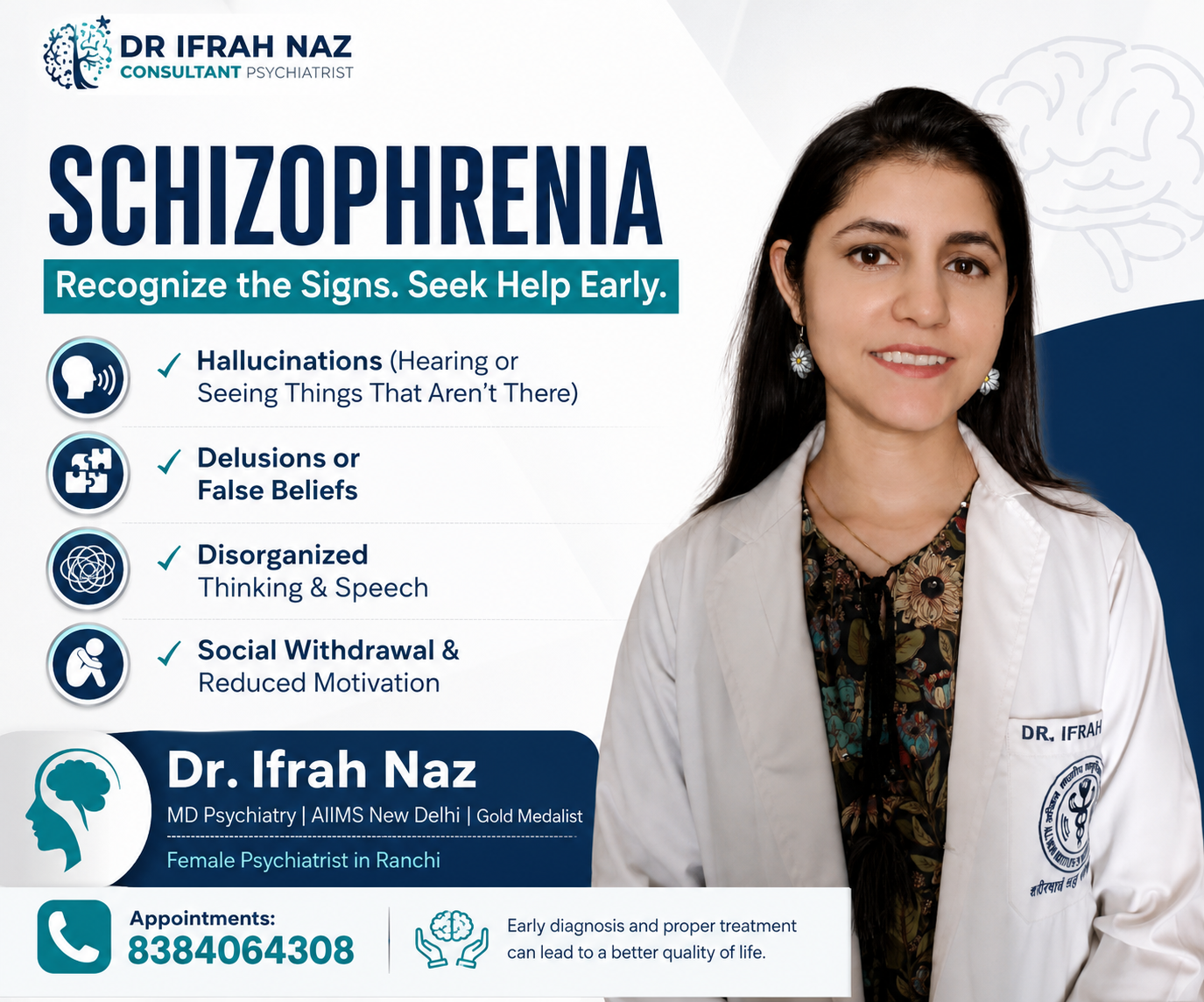
Schizophrenia: Symptoms, Causes, Diagnosis & Treatment – A Complete Guide
Schizophrenia is a complex mental health disorder that affects how a person thinks, feels, behaves, and perceives reality. Although it is often misunderstood, schizophrenia is a treatable condition, and with early diagnosis and appropriate treatment, many people can lead meaningful and productive lives.
Learning about schizophrenia, its symptoms, causes, and available treatment options helps reduce stigma and encourages individuals to seek timely professional support.
What is Schizophrenia?
Schizophrenia is a chronic psychiatric disorder that affects thinking, emotions, behavior, and perception. People living with schizophrenia may have difficulty distinguishing between what is real and what is not.
The condition commonly begins in late adolescence or early adulthood, although it can develop at different ages.
Contrary to common myths, schizophrenia does not mean having multiple personalities. It is a medical condition that requires professional evaluation and treatment.
Common Symptoms of Schizophrenia
The symptoms of schizophrenia generally fall into three categories.
Positive Symptoms
These are experiences that are added to normal functioning.
They include:
- Hallucinations (hearing or seeing things that others do not)
- Delusions (strong false beliefs despite evidence)
- Disorganized thinking
- Disorganized speech
- Unusual or unpredictable behavior
Negative Symptoms
These involve a reduction in normal emotional or behavioral functioning.
Examples include:
- Reduced emotional expression
- Lack of motivation
- Social withdrawal
- Difficulty experiencing pleasure
- Reduced speech
Cognitive Symptoms
Some people may also experience:
- Poor concentration
- Memory problems
- Difficulty making decisions
- Trouble planning daily activities
Early Warning Signs of Schizophrenia
Recognizing the early signs allows treatment to begin sooner.
Possible warning signs include:
- Social isolation
- Sudden decline in academic or work performance
- Suspiciousness
- Difficulty concentrating
- Emotional flatness
- Sleep disturbances
- Increased anxiety
- Unusual beliefs
- Changes in personal hygiene
- Reduced interest in daily activities
Early recognition can improve long-term outcomes.
What Causes Schizophrenia?
The exact cause remains unknown, but research suggests multiple contributing factors.
Genetics
A family history increases the risk, although many people with schizophrenia have no affected relatives.
Brain Chemistry
Changes in neurotransmitters such as dopamine and glutamate are believed to play an important role.
Brain Development
Differences in brain structure and development may contribute.
Environmental Factors
Possible contributing factors include:
- Prenatal complications
- Birth complications
- Severe psychological stress
- Substance misuse in vulnerable individuals
Usually, schizophrenia develops due to a combination of biological and environmental influences.
How is Schizophrenia Diagnosed?
There is no single laboratory test for schizophrenia.
Mental health professionals diagnose the condition using:
- Comprehensive psychiatric evaluation
- Medical history
- Family history
- Clinical interview
- Behavioral observation
- Assessment of symptoms
- Physical examination (to rule out other causes)
Diagnosis follows internationally accepted psychiatric guidelines.
Treatment for Schizophrenia
The good news is that schizophrenia is treatable.
A personalized treatment plan may include:
Medication
Antipsychotic medications help reduce hallucinations, delusions, and disorganized thinking.
Psychotherapy
Psychological therapies help improve coping skills, emotional well-being, and recovery.
Family Education
Educating family members improves understanding and strengthens support systems.
Psychosocial Rehabilitation
Programs help individuals improve daily living skills, employment opportunities, and social functioning.
Lifestyle Support
Healthy sleep, regular exercise, stress management, and avoiding alcohol or recreational drugs contribute to better outcomes.
Can People Recover from Schizophrenia?
Yes.
Although schizophrenia is usually a long-term condition, many individuals experience significant improvement with:
- Early diagnosis
- Regular treatment
- Medication adherence
- Family support
- Counseling
- Rehabilitation services
Recovery looks different for each person, but many people successfully study, work, build relationships, and enjoy fulfilling lives.
When Should You Seek Professional Help?
Seek professional help if you or someone you know experiences:
- Hearing voices
- Persistent suspicious thoughts
- Delusions
- Withdrawal from family and friends
- Confused thinking
- Major personality changes
- Decline in work or school performance
- Difficulty distinguishing reality
Early treatment improves recovery and reduces complications.
Myths vs Facts About Schizophrenia
Myth:
People with schizophrenia have multiple personalities.
Fact:
Schizophrenia is not multiple personality disorder. These are entirely different conditions.
Myth:
Schizophrenia cannot be treated.
Fact:
With appropriate psychiatric care, medication, and therapy, many people manage symptoms successfully.
Myth:
People with schizophrenia are always violent.
Fact:
Most people with schizophrenia are not violent and are more likely to need support than pose a risk.
Tips for Supporting Someone with Schizophrenia
- Encourage professional treatment.
- Be patient and understanding.
- Avoid arguments about delusions or hallucinations.
- Help maintain medication schedules.
- Promote healthy daily routines.
- Watch for worsening symptoms.
- Offer emotional support without judgment.
Frequently Asked Questions (FAQs)
1. What is schizophrenia?
Schizophrenia is a chronic mental health disorder that affects thinking, emotions, perception, and behavior.
2. What are the early signs of schizophrenia?
Early signs may include social withdrawal, suspiciousness, sleep problems, unusual beliefs, difficulty concentrating, and declining academic or work performance.
3. What causes schizophrenia?
Schizophrenia is believed to result from a combination of genetic, biological, brain chemistry, and environmental factors.
4. Is schizophrenia hereditary?
Genetics can increase the risk, but having a family history does not mean someone will definitely develop schizophrenia.
5. Can schizophrenia be cured?
There is currently no cure, but schizophrenia can be effectively managed with medication, psychotherapy, rehabilitation, and ongoing mental health care.
6. How is schizophrenia diagnosed?
Diagnosis is made through a detailed psychiatric assessment, medical history, symptom evaluation, and behavioral observation.
7. What treatments are available for schizophrenia?
Treatment typically includes antipsychotic medication, psychotherapy, family support, psychosocial rehabilitation, and lifestyle management.
8. Can people with schizophrenia live normal lives?
Yes. With early diagnosis, appropriate treatment, and ongoing support, many people with schizophrenia lead independent and fulfilling lives.
9. What is the difference between psychosis and schizophrenia?
Psychosis is a symptom involving a loss of contact with reality, while schizophrenia is a mental health disorder in which psychosis may occur along with other symptoms.
10. When should someone seek professional help?
Professional help should be sought if hallucinations, delusions, severe confusion, social withdrawal, or major behavioral changes are present.